Summary
In 2025, ECAIR's DUNONG (Dashboard for Understanding NASH Outcomes and Grade-Generation System) supported the Department of Education's work to strengthen its pipeline of future school leaders. Working with the Bureau of Human Resource and Organizational Development (BHROD), DUNONG provided analytics during a period when the National Qualifying Examination for School Heads (NQESH) passing rate rose from 27% in 2024 to 39% in 2025.
Turning Exam Results into Leadership Insight
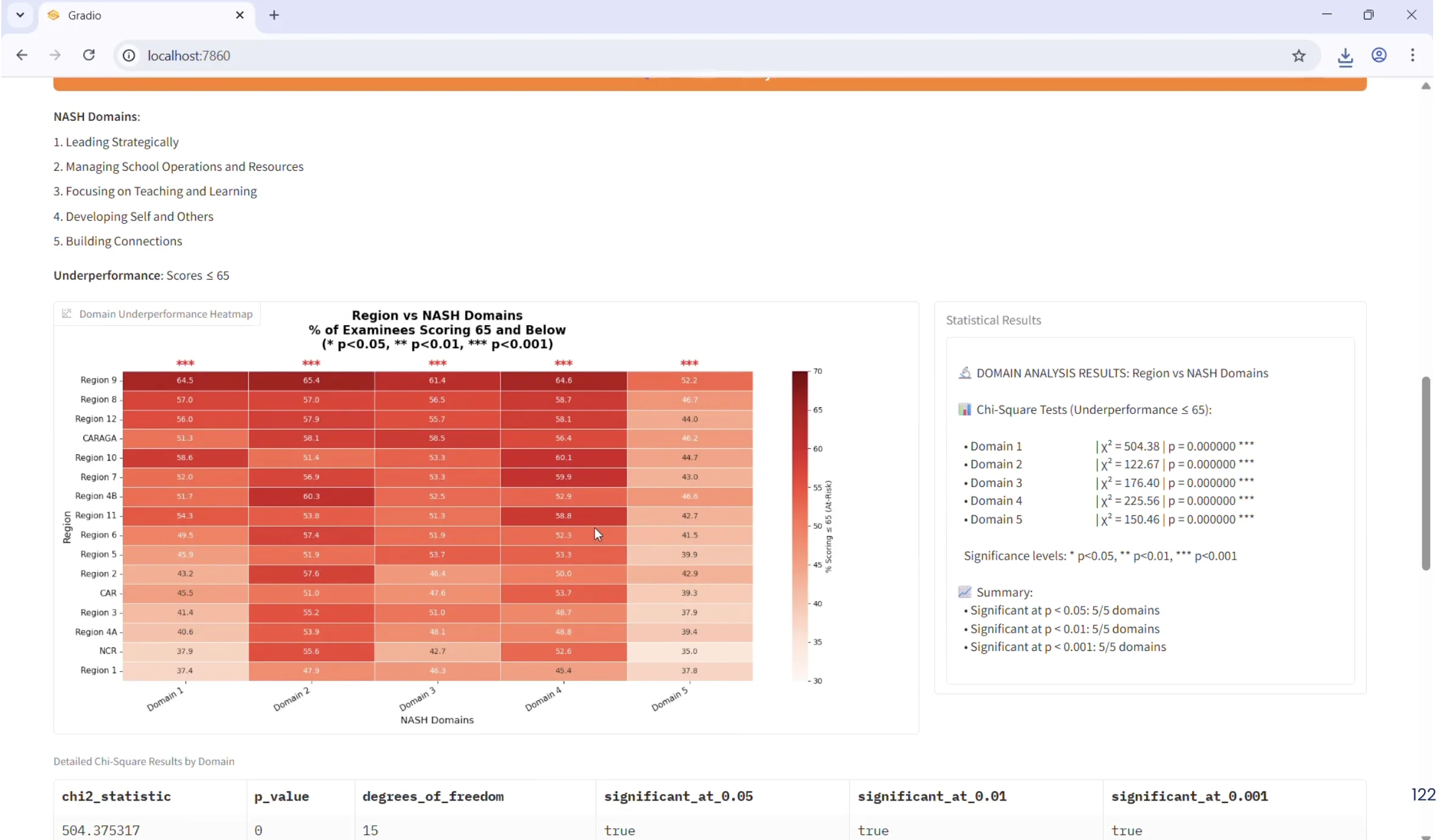
DUNONG is an end-to-end analytics system that transforms raw examination results into actionable insight for school leadership development. Using both standard and Rasch-based analysis, it gives BHROD and the National Educators Academy of the Philippines (NEAP) a clearer, growth-oriented view of where aspiring principals are ready and where they need support. By making patterns of readiness visible across regions, DUNONG helped move principal selection and development from experience-based judgment toward evidence.
That clearer view of readiness accompanied a measurable result: the NQESH passing rate rose from 27% in 2024 to 39% in 2025, part of a broader effort to strengthen the leadership pipeline for schools across the country.
Personalized Feedback for Examinees
In the fourth quarter of 2025, DUNONG 2.0 extended this work by supporting the generation of Individual Development Reports (IDRs) for the National Assessment for School Heads (NASH). These reports give examinees personalized feedback on their results, so preparation and professional growth can be tailored to each aspiring school head rather than treated generically.
Why It Matters
Behind the numbers is a simple goal: better-prepared school leaders for Filipino learners. By grounding a high-stakes national assessment in clear evidence, DUNONG helps the Department invest in leadership development where it counts and gives aspiring principals a fairer, more transparent path to readiness.